


In 2026, Nigeria’s energy landscape is shifting rapidly. With the national grid remaining unpredictable and the cost of diesel and petrol soaring, small business owners are turning to solar energy to stay competitive.
It doesn’t matter if you run a pharmacy, a cold-room, or a tech hub, switching to solar power for small businesses like yours is no longer a luxury, it is a strategic necessity. But what exactly do you need to get started?
You might want to check out some renewable energy trends in Nigeria.
This guide breaks down the technical, financial, and regulatory requirements for a successful installation with solarpowersolutions.ng.
Energy Audit: Assessing Your Power Needs
Before buying a single solar panel, you must understand your consumption. A professional solar energy company will begin by conducting an energy audit.
- Load Assessment: List every appliance (bulbs, fans, computers, printers, refrigerators, or ACs).
- Operational Hours: Does your business run only during the day, or do you need 24/7 power for security and refrigeration?
- Peak Demand: Identifying your “surge” loads (like starting an AC or a pump) determines the size of the inverter you need.
Pro Tip: Upgrading to energy-efficient LED bulbs and inverter-based appliances can reduce your initial solar investment by up to 30%.
Technical Requirements: The Hardware
A reliable solar system is only as good as its components. For a small business, the standard requirements include:
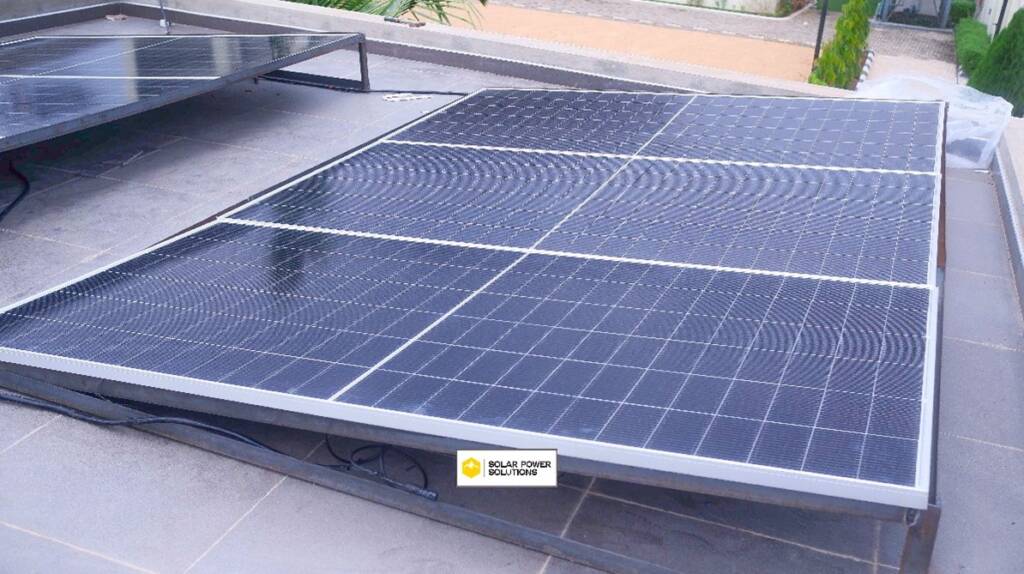
- Solar Panels: High-efficiency monocrystalline solar panels (like Jinko or Canadian Solar) are recommended for Nigerian weather because they perform better in high temperatures.
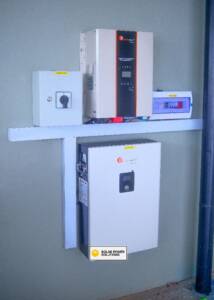
- Inverters: For small businesses, a “Pure Sine Wave” hybrid inverter is essential to protect sensitive electronics like laptops and servers.
- Battery Storage: While solar power for homes often uses deep-cycle tubular batteries, businesses are increasingly moving toward Lithium-ion (LiFePO4) batteries. They last 8–12 years and handle daily heavy cycling much better.
- Mounting Space: You need a sturdy, unshaded roof or ground space. In Nigeria, panels should ideally face South to capture maximum sunlight.
Financial Requirements and Costs (2026 Estimates)
While the long-term savings are massive, the upfront cost remains a factor. In 2026, typical costs for business setups in Nigeria range as follows:
System Size | Capacity (Typical Load) | Estimated Cost (₦) |
3.5KVA System | PCs, Fans, Lights, Fridge | ₦2,800,000 – ₦4,600,000 |
5KVA System | 1HP AC, Freezer, Full Office | ₦4,800,000 – ₦7,100,000 |
10KVA System | Multiple ACs, Industrial Printers | ₦7,100,000 – ₦8,300,000 |
Financing Options
Many businesses now use Solar-as-a-Service (SaaS) or “Lease-to-Own” models to avoid the high upfront cost, paying monthly instalments instead.
Regulatory and Legal Compliance
Under the Electricity Act 2023 and updated NERC guidelines for 2026, the rules for small-scale solar are quite friendly:
- License Exemptions: If your system generates less than 1 megawatt (1MW), you do not need a formal power generation license from the government.
- Net Billing: If your business is in an area with a Distribution Company (DisCo) and your system is above 50kWp, you may be eligible for Net Billing. This allows you to “sell” excess power back to the grid for credits on your bill.
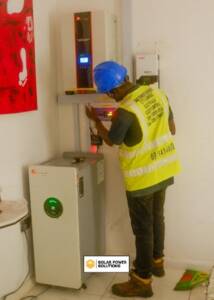
- NEMSA Certification: Your installation must be carried out by a certified engineer to ensure it meets the Nigerian Electricity Supply and Installation Standards (NESIS).
You can explore the Federal Government solar initiatives via the REA.
Maintenance and Support
Solar is low-maintenance, but not “no-maintenance.” To keep your solar energy system running at peak efficiency, you must:
- Clean the Panels: Dust and soot (especially during harmattan) can drop efficiency by 20%.
- Ventilation: Ensure your inverter and batteries are kept in a cool, dust-free room.
- Annual Checkups: Have your solar energy company perform a thermal scan of the wiring and a battery health check once a year.
Click here to shop our tax-free solar gadgets now.
Why Choose Solar for Your Business?
Beyond the quiet environment (no more generator noise!), solar energy provides fixed energy costs. While fuel prices fluctuate, the sun is free. This allows for better financial forecasting and higher profit margins.
Ready to Power Your Success?
At SolarPowerSolutions.ng, we provide tailored energy solutions designed to scale with your business. Whether you are powering a small retail shop or a heavy-duty production facility, we have the expertise to keep your lights on.
- Free Energy Audit: Click here to request a professional assessment for your business today!
- Smart Investment: Transition from paying electricity bills to owning a high-value power asset.
You can become an owner of one of these assets.
Click here to shop our tax-free solar gadgets now!