


Chidi lives in Lagos. Every month, he spends somewhere between ₦150,000 and ₦200,000 on petrol just to keep his generator running. He tracks it on a notes app on his phone, and every time he looks at the total, the number feels worse than the last time. He is not alone. Many Nigerian households run the same calculation every month, and in 2026, a growing number are arriving at the same answer: photovoltaic systems make financial sense, especially as generator costs climb and panel prices continue to fall.
This guide explains what solar energy is, how the technology works in plain English, what a complete system realistically costs a Nigerian household, and how to assess whether your home is ready. After seven-plus years helping Nigerian homeowners make the switch, the team at Solar Power Solutions has seen the same questions come up again and again, so we put all the answers in one place.
How Solar Energy Actually Works
Solar panels are made of photovoltaic (PV) cells, most commonly constructed from silicon. When sunlight hits those cells, it delivers tiny energy particles called photons. Those photons knock electrons loose from their silicon atoms, and those electrons begin to flow in a specific direction, creating an electrical current. Think of sunlight as the push, electrons as the water, and the panel as the pipe.
Panels and Inverters
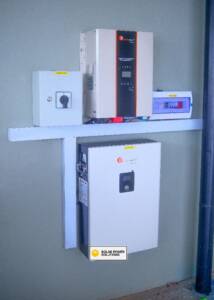
There is one important catch: PV panels produce direct current (DC) electricity, but Nigerian homes run on alternating current (AC). The inverter bridges that gap, converting DC from your panels into AC that your appliances can use. Because most household lights and appliances require AC, an inverter is essential to running your home from a photovoltaic system. This is why inverter selection is one of the most important decisions in any system build, factors like efficiency ratings, MPPT performance, warranty terms, and brand reliability affect long-term value more than most buyers initially expect.
Battery storage
The third piece of the puzzle is battery storage. During the day, your panels may produce more electricity than you are currently using. That excess energy charges a battery bank. At night, or on heavily cloudy days, the battery supplies power to your home. This is what makes a solar setup a genuine NEPA alternative rather than just a daytime supplement. Without batteries, you are back on generator the moment the sun sets.
Why Nigeria is Built for Solar Power
Nigeria sits between 4 and 14 degrees north of the equator, placing it squarely in one of the most solar-rich zones on earth. Depending on your location, you receive between 3.9 and 6.4 peak sun hours per day. Abuja averages 5.2 hours. Lagos runs at 4.1 to 5.4 hours. Even Port Harcourt, the cloudiest of Nigeria’s major cities, still gets enough solar radiation to run a well-sized system reliably. Northern cities like Kano, Maiduguri, and Sokoto average over 6 hours daily. Radiation levels across Nigerian states range from 4.25 to 6.25 kWh per square metre per day. That is not a marginal resource, it is a national advantage.
For broader context, over 2.2 terawatts of photovoltaic capacity is now installed worldwide in 2026, with annual additions running at 450 to 600 gigawatts globally. Sun-rich countries, including Nigeria, stand to benefit substantially from that expansion, and the technology to capture it is already mature and commercially available here.
Now look at what you are already paying. A 2.5KVA petrol generator running 5 hours a day costs roughly ₦143,000 per month in fuel and maintenance. A 5.5KVA unit running 6 hours a day can top ₦339,000 monthly. Many Nigerian households spending ₦150,000 or more each month on generator costs are already financing an energy system in instalments, they are just getting nothing to show for it. Panel costs do not rise with fuel prices. Once installed, a system runs for 20 to 25 years. Generator expenditure is permanent. A photovoltaic installation is a one-time decision.
The three solar system types every Nigerian buyer should understand
An off-grid system operates with zero connection to the national grid. It relies entirely on panels and a battery bank to supply all your power. This setup suits areas with chronic or near-total PHCN failure, including rural communities and many semi-urban neighbourhoods. The upfront cost is higher because your battery bank must carry the full load through nights and cloudy periods, but you get complete energy independence from NEPA.
A hybrid system connects to both your panels and the grid, with a battery bank as backup. When PHCN is supplying power, the system uses that supply and stores any excess. When PHCN disappears, your batteries and panels take over seamlessly. This configuration is widely recommended for urban Nigerian homes, and for good reason: it maximises both reliability and value by making use of whatever grid power is available while ensuring you are never caught without electricity.
A grid-tied system feeds excess electricity back into the grid but has no battery storage. It is cheaper to install than a hybrid setup, but it goes completely dark during a power outage because there is no battery to fall back on. Given Nigeria’s grid reality, a grid-tied system is rarely the right choice for most households. The savings on installation cost are quickly outweighed by the fact that you still need a generator for every blackout.
What a solar system realistically costs in Nigeria in 2026
System cost comes down to three variables: how much power you need, how many hours of backup you require, and which brands and components you select. A home running LED lights, a fridge, fans, a TV, and a decoder has very different needs from one that also includes an air conditioner or a water pump. Panel wattage, inverter capacity, and battery bank size all shift the final price.
For a concrete example, consider a 3-bedroom flat in Abuja running basic appliances and needing 6 to 8 hours of daily backup. A 2.5KVA hybrid system with 1.2kW of panels and two tubular batteries runs in the range of ₦2,100,000. A more comprehensive 3.5KVA hybrid system with 3.3kW of panels and four tubular batteries, enough to cover a daily load of up to 10kWh, comes in around ₦3,600,000. Opting for lithium batteries instead of tubular adds roughly ₦150,000 to the package, but you get a 5-year battery warranty and better depth of discharge. Entry-level systems for smaller loads start below ₦1,000,000.
Rather than guessing, the smarter move is to get a quote designed around your actual appliances and usage. The team at Solar Power Solutions does exactly that: custom system sizing based on your real load and budget, using quality brands including Luminous, Felicity, and Jinko panels, all supplied with warranties. No generic packages, no overselling, just a system built to fit your life.
Ready to see what a system would cost for your home? Request a free custom quote from Solar Power Solutions and get sizing built around your actual load.
For recent market surveys on installation prices in Nigeria, see how much it costs to install a solar energy system in 2026.
Click here to shop our tax-free solar gadgets now.
How to tell if your home is ready for solar
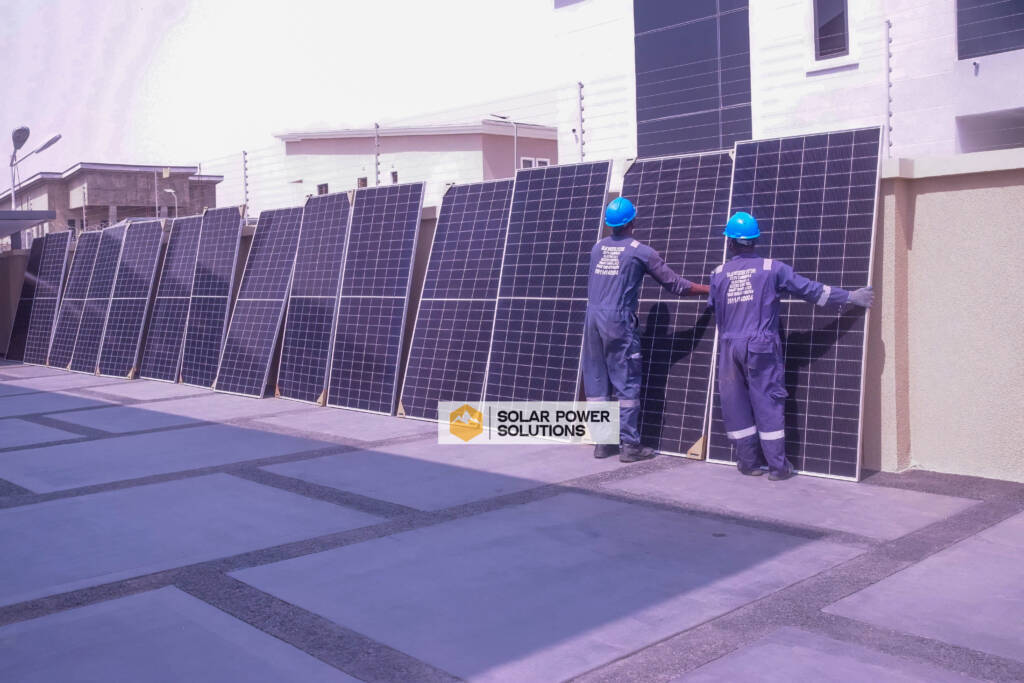
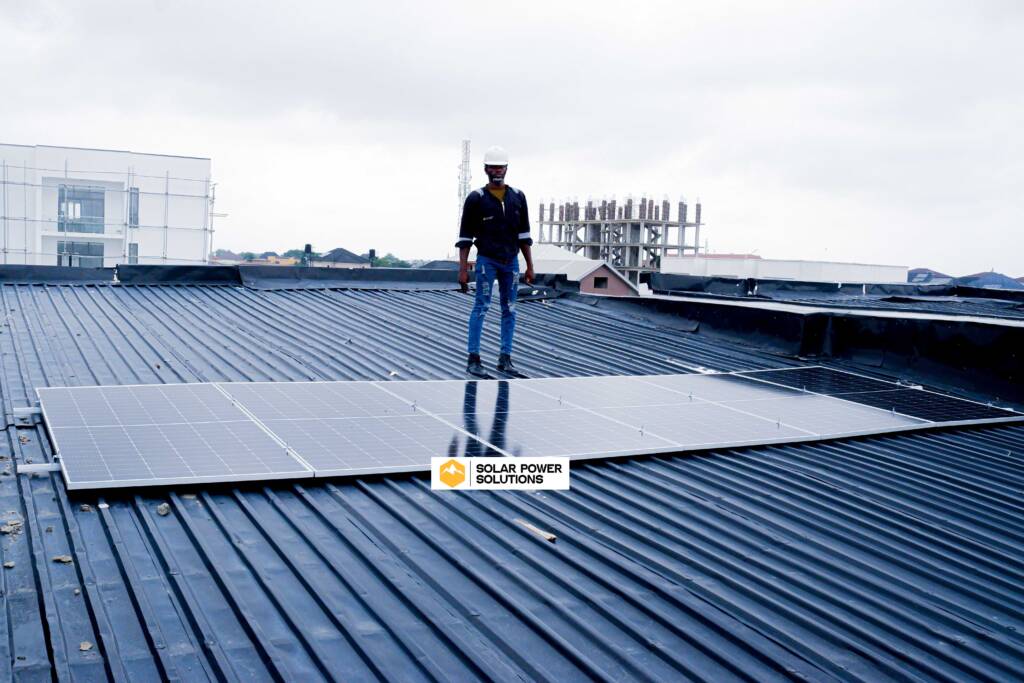
Start with your roof. South-facing surfaces with minimal shading give you the best output in Nigeria’s tropical latitude. Trees, water tanks, neighbouring buildings, and any structure casting shadow on your panels will reduce generation significantly. The flat concrete rooftops common across Nigerian homes are often ideal for panel mounting because they offer flexibility in orientation and easy access for installation. Walk around your roof at midday and note anything casting a shadow.
Calculating your daily power needs
Before you spend anything, list every appliance you want to run and note its wattage and how many hours per day you use it. A typical Nigerian household baseline includes:
- 2 ceiling fans at 75W each: 150W total
- 8 LED bulbs at 10W each: 80W total
- 1 refrigerator: 150W
- 1 television: 100W
- 1 decoder: 50W
Multiply each appliance’s wattage by the hours you run it daily, add everything up, and you have your daily energy consumption in watt-hours. That single number determines the size of every component in your system. Any reputable supplier will ask you for exactly this information before recommending anything.
Mistakes first-time buyers make
Two errors trip up most first-time buyers in Nigeria.
The first is undersizing the system to cut upfront costs, then overloading it within a month.
The second is buying cheap, unbranded components without warranties.
Both end up costing significantly more to fix than they saved at purchase.
Buying right the first time is almost always cheaper than replacing components a year later.
Your practical next steps to going solar in Nigeria
You do not need to buy anything this week. Start by writing down every appliance in your home, its wattage, and how many hours per day you use it. This load assessment takes about 20 minutes and gives any supplier the foundation for an accurate, properly sized quote. Many poor purchasing decisions in Nigeria come down to skipping this step, buyers end up with a system that cannot handle their actual usage.
When choosing a supplier, look for a few specific things. Good suppliers stock branded, warranted products and can walk you through the load calculation behind their recommendation, building systems around your actual needs rather than whatever stock they happen to have available. Ask directly about after-sales support and what happens if a component fails within the warranty period. A supplier who cannot answer those questions confidently is a red flag.
The team at Solar Power Solutions provides free custom quotes based on your home’s actual load and budget. Whether you are starting with a basic inverter-and-battery setup or building a full hybrid system, the team will help you find the right configuration without overspending. Share your appliance list and get a quote built for your home, not a generic package.
The sun shows up every day, whether NEPA does or not
Photovoltaic energy is no longer a luxury reserved for high-income households. In 2026, for many Nigerian homeowners, particularly those spending ₦100,000 or more monthly on generator fuel, it represents one of the most practical financial decisions available. The fuel cost you are paying every month is real money that could be building toward energy independence instead of disappearing into a petrol tank.
Understanding how PV systems work, what a realistic setup costs, and what your home actually needs puts you in control of that decision. Get your load calculation done, ask sharp questions when speaking to suppliers, and choose a team that builds systems around your life rather than a shelf price. The sun will rise tomorrow regardless, the question is whether you are capturing it. Click here to get started.